Bhargav Shah
Oct 09, 2026

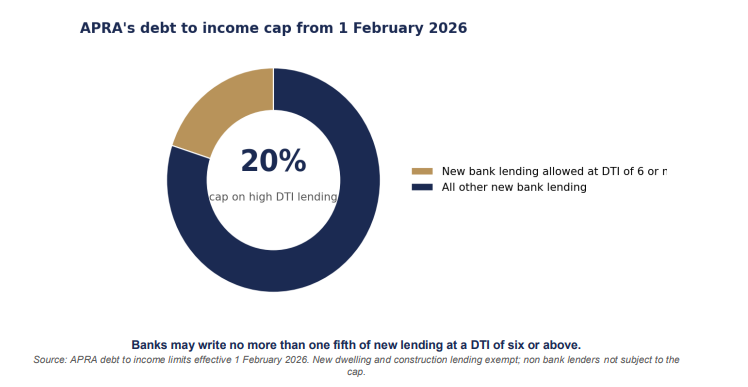
From 1 February 2026, APRA limits banks to writing no more than 20 percent of new mortgage lending at a debt to income ratio of six or higher. The measure targets high leverage borrowing, and portfolio investors feel it first, because an investor with three properties can carry a DTI above six while servicing comfortably.
Two carve outs define your playbook. Lending for new dwellings and construction is exempt, a deliberate design choice to protect housing supply. And non bank lenders sit outside the cap entirely. A file that is impossible at one institution in the last month of a quota period can be straightforward at another, or through a different structure, or against a different security.
Under the cap, lender selection stops being a pure policy question and becomes a quota question. The same bank that approved an identical file in February may decline it in May because its high DTI allowance for the period is spent. You cannot see the quota. You can only infer it from declines, BDM signals and settlement patterns, which means your lender intelligence now has a shelf life measured in weeks.
The practical consequence is scenario multiplication. A high DTI file that once went to an obvious lender now needs modelling across banks, non banks, construction exemptions and structural options before you recommend anything. That is better advice, and it is exactly why borrowers keep flooding to brokers, who now write 81.6 percent of new home loans. It is also two to three times the research and documentation per file
Investors are the cap's real audience, and they know it. A portfolio holder with three properties can service comfortably yet sit above a DTI of six on any reasonable calculation, which makes them exactly the file a quota constrained bank declines in the back half of a period. The advice conversation has accordingly shifted from can we get this approved to how do we sequence the next three purchases across lenders, structures and time
The toolkit is richer than most clients realise. Construction and new dwelling lending sits outside the cap, which turns build to invest strategies from a lifestyle choice into a financing pathway. Non bank lenders sit outside it entirely and have moved quickly to court exactly this borrower. And timing matters: the same bank that declines in month three of a quota period may welcome the file in month one of the next.
One caution belongs in every investor conversation this year: policy risk is live. Industry press has reported a proposed 30 percent minimum tax on discretionary trusts, which, if it proceeded, would reshape structure decisions for property investors again. Nothing is settled, but the era of set and forget structuring is over, and clients should hear that from their broker before they read it in a headline.
They position DTI early. The conversation happens at fact find, not at decline. Clients hear the words quota and exemption before an application exists, so a redirection to a non bank or a construction pathway lands as strategy, not failure
They productise the portfolio review. Every investor client with multiple properties gets a standing DTI position review, because the cap turned portfolio structure into an ongoing advice need rather than a transaction.
They separate thinking from processing. The strategy is the broker's job. The scenario runs, document packs and lender follow ups are structured, delegated work, because a broker doing both at 2026 volumes is a bottleneck with a licence.

.png)



.png)
.png)
.svg)